In a managed workspace, the coffee point is part of the member experience. It must feel welcoming, survive unpredictable demand and be straightforward for an operations team to run across one floor or an entire portfolio.
Think in zones, not just buildings
A reception lounge, a shared kitchen, an executive floor and a bookable meeting suite rarely need identical coffee setups. Map expected drink demand by area, peak arrival times and the type of visitor. A good portfolio standard can still include different machines for light, medium and busy zones.
Plan for the morning rush
Daily capacity figures can hide the pressure of several people queuing just before meetings. Check drink preparation time, bean and water replenishment, waste capacity, milk throughput and how easily operators can reset the machine. A second serving point may outperform one oversized unit when groups arrive together.
Give members choice without making operations difficult
For some locations, excellent black coffee and a few milk drinks will be enough. Premium spaces may justify dual-bean capability or separate dairy and plant-based milk options. The latter needs clear cross-contact and cleaning procedures; two milk supplies do not by themselves guarantee an allergen-free drink.
Single milk versus dual milk: our guide
Design the tea point before the fit-out is complete
Early decisions about water, drainage, electricity, waste and refrigerator space prevent expensive retrofits. Where the machine is plumbed in, coordinate with the fit-out contractor and arrange a site check before the cabinets are signed off. For spaces already in use, a tank-fed solution may provide an easier start.
Standardisation versus flexibility
Using a consistent manufacturer or small family of machines can simplify staff training, cleaning stock and parts. However, identical machines in every location may be wasteful. Record each site’s expected occupancy, operating hours, drink mix and service requirements, then choose from an agreed shortlist.
Who handles maintenance and consumables?
Make daily cleaning ownership explicit. Decide whether operators order consumables centrally or per location, and who receives fault notifications. Compare machine-only purchasing with optional service and maintenance rather than assuming every building needs an all-inclusive contract.
Machine options by workspace area
There is no single “managed workspace machine”. A four-desk suite, a 70-person serviced floor and a busy shared members’ lounge can all require different equipment. Use these examples as a starting shortlist, not fixed capacity brackets.
Smaller suites and secondary kitchens
The JURA W8 is worth considering for lower-volume locations wanting fresh-milk coffees. Where the operator would rather avoid a fresh-milk fridge, explore an appropriately configured Gaggia G100 with granulated milk and, where specified, hot chocolate.
Medium and consistently busy tea points
A plumbed-in JURA X10/X10c may suit a location focused on black and fresh-milk coffee. The JURA GIGA X3/X3c is another credible step for a busier fresh-milk area. If the priorities are granulated milk, straightforward replenishment and chocolate capability, consider the Gaggia G300 in the relevant configuration.
High-traffic lounges and flagship locations
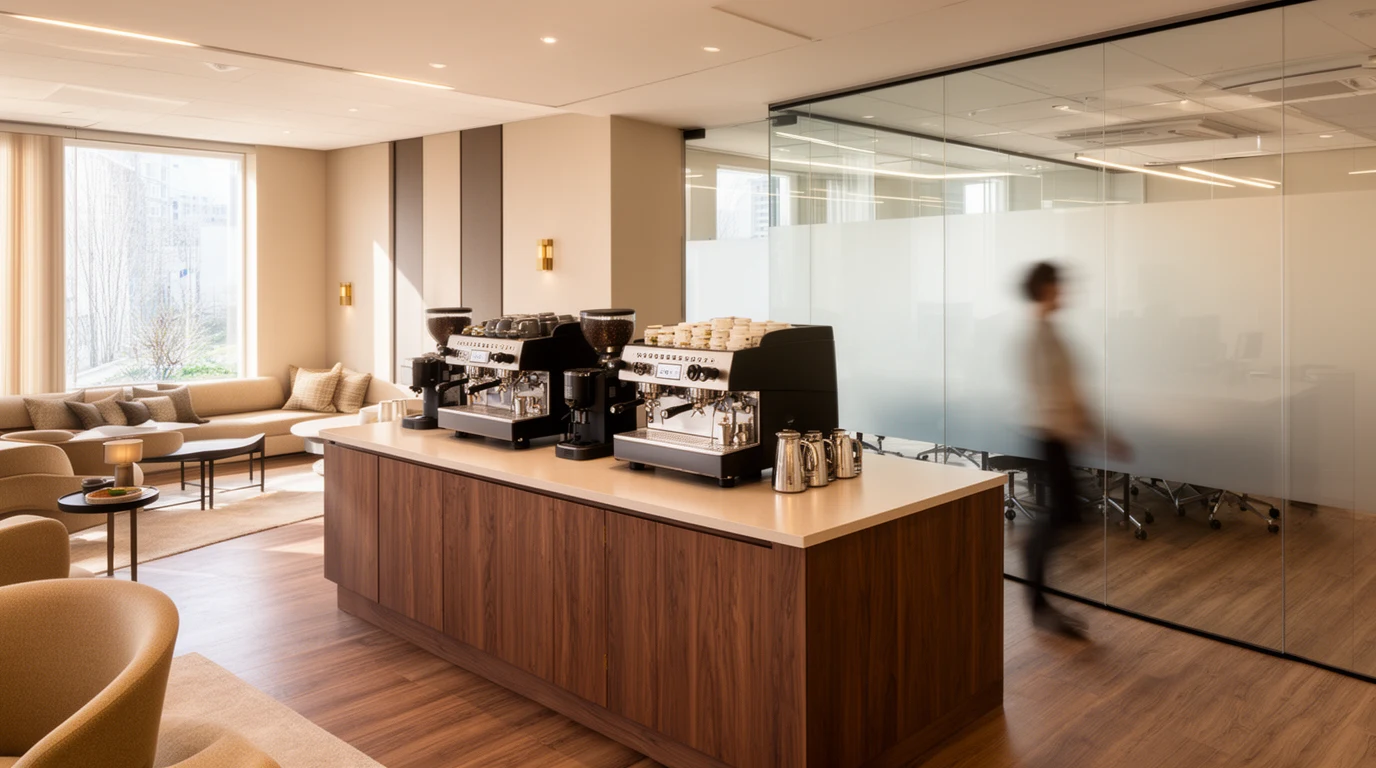
The JURA GIGA X8/X8c brings two grinders for locations where bean choice matters, including regular and decaf. The Gaggia G700 is worth examining for higher demand and broader drinks menus, subject to the selected milk and chocolate configuration. Several smaller machines across well-placed coffee points may work better than one large unit.
The shortlist depends on drinks per day, queue peaks, dairy or plant-milk preferences, decaf, chocolate, cleaning resources and whether the site can be plumbed in. We would narrow the options after reviewing the actual site rather than push every location towards the same model.
Build a scalable procurement plan
For upcoming openings, agree standard small, medium and high-demand packages, indicative lead times and site-survey requirements. Review purchasing, leasing and end-of-term arrangements with the finance team. A multi-site roll-out should be easy to audit and adapt as occupancy changes.
See our managed workspace solutions
Office Brew Solutions can help operators specify coffee and water points across multiple sites, compare models and plan installations around building works.
Compare your own workspace setup
Start with one tea point, choose the machine and configuration that best matches its demand, then compare purchase and lease options in the Quote Builder. For multi-site roll-outs, OBS can help agree a consistent shortlist without limiting every location to the same model.
Build a Quote for Your Workspace