
Headcount & attendance
Team size, hybrid working patterns and planned growth—not just the number on the payroll.
Office coffee machines + workplace water / UK
Plan office coffee machines and filtered water around attendance, daily drinks and the layout of your tea points. OBS helps UK businesses turn those requirements into a practical shortlist, an installation plan and clearly specified support.
No machine shortlist required. Bring the headcount, layout and project timing; we will help shape the brief.
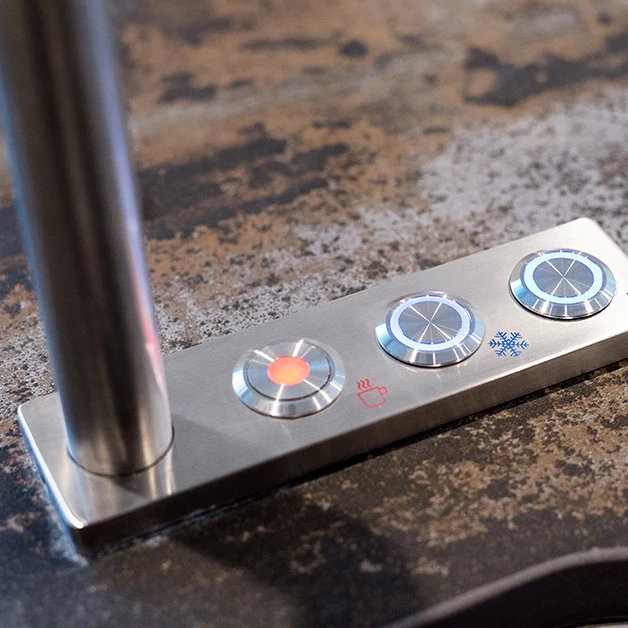 WATER / PART OF THE SAME BRIEF
Start with the brief
Published machine capacities are useful, but they cannot tell us where queues will form, how many people are on site, whether a second tea point is needed or what the kitchen can physically support.
Team size, hybrid working patterns and planned growth—not just the number on the payroll.
Total drinks matter, but the busiest 30–60 minutes can be the real sizing constraint.
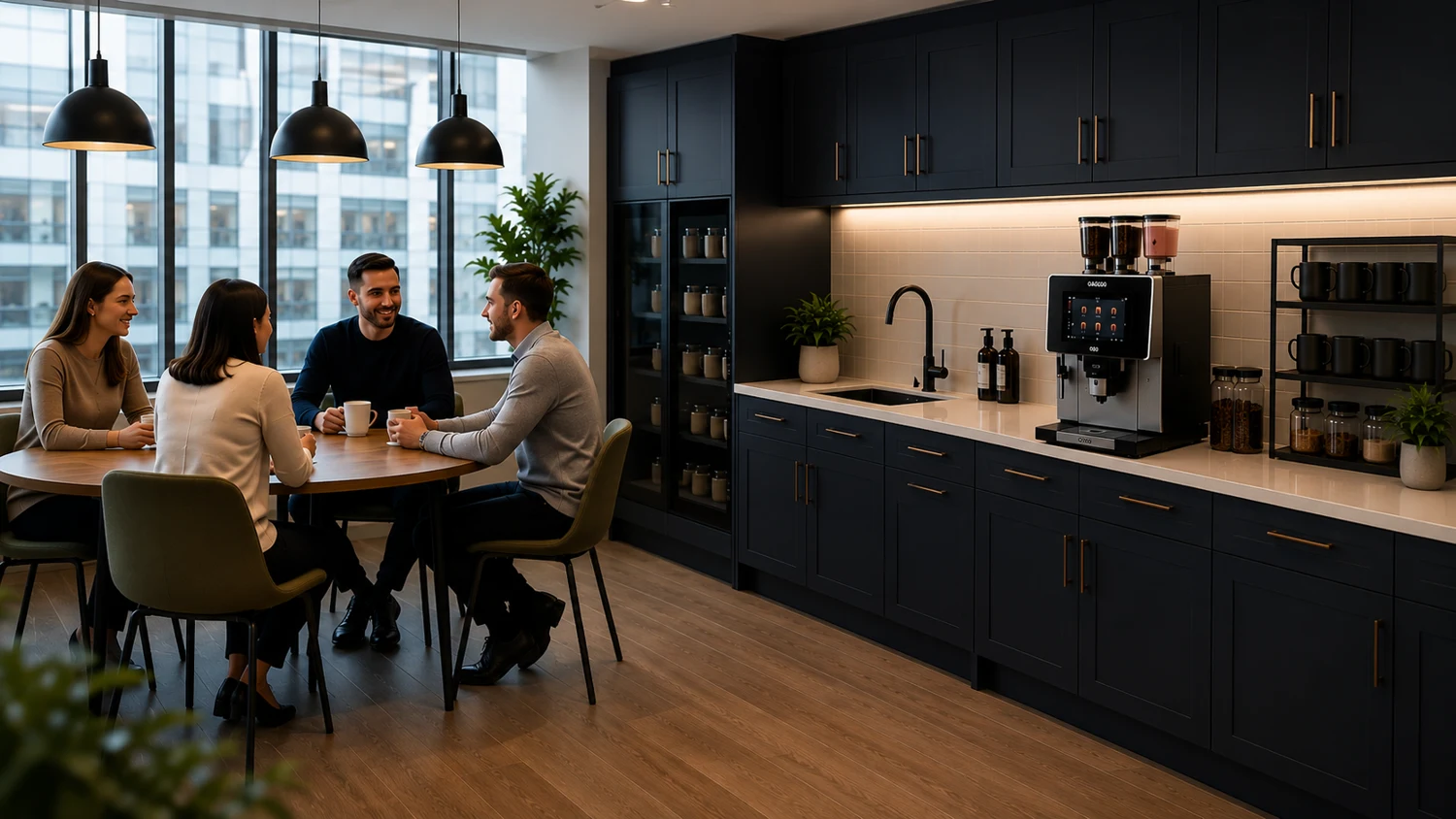
Floors, walking routes and kitchen locations help decide between one central setup and several smaller ones.
Coffee styles, fresh milk, alternative milk, decaf, tea and drinking-water expectations.
Counter space, cupboards, power, mains water, waste, filtration and access for installation.
Purchase or finance, support expectations, project programme and who needs to approve the recommendation.
An illustrative demand estimate
This example assumes 95 people on site, 75% choosing coffee and two to three cups each. Replace those assumptions with your own attendance and usage before choosing a machine.
Use our office coffee machine size guide to turn headcount, attendance and peak demand into a more useful brief.
Layout changes the answer
A single high-capacity machine can look right on a spreadsheet. Two well-positioned machines may work better for the people using them. We compare the whole workplace, not just the headline output.
Potentially simpler to manage where teams naturally meet in one main kitchen or hospitality area.
Two appropriately sized machines can distribute demand and give useful resilience in a larger workplace.
There is no automatic answer. We look at volume, peak demand, walking routes, space, utilities, drink quality and the workload your team is willing to take on.
One joined-up plan
Coffee machines, tea-making water and drinking-water systems compete for the same valuable space and may depend on related plumbing, drainage, power and under-counter equipment.
Planning them together helps the facilities or fit-out team see the full requirement early. We will explore the relevant functions, then verify the current system and product specification before recommending equipment.
Planning a fit-out? See project support ↗From brief to equipment
Start with the drinks and demand at each tea point, then check the machine, water system and space together. A single office and a busy shared floor may need different equipment and daily routines.
Compare Gaggia G100 and G300 configurations where dry ingredients and hot chocolate matter. Confirm the menu for the selected setup and compare fresh and powdered milk routines.
See how OBS installed four W8 machines across four tenant floors at Frameworks, then plan the demand at each of your own coffee points.
Simple by design
The aim of the first conversation is not to sell a favourite machine. It is to uncover what the workplace needs and what could derail the project later.
A short phone or Teams meeting covering people, drinks, building layout, timing and priorities.
We test daily volume, peak usage and whether one or several tea points make sense.
You receive a small number of suitable options with the practical and commercial differences explained.
We confirm installation requirements with your facilities, fit-out or M&E contacts before delivery.
Useful buying triggers
You do not need to wait until the current machine fails. The best time to fix the brief is before cabinetry, services, finance or a replacement agreement locks in the wrong answer.
Plan tea points, capacity and utilities while the new workplace can still adapt.
Coordinate new equipment with joinery, plumbing, electrical work and the project programme.
Compare what you use, what you pay for and what a right-sized alternative could look like.
Address queues, slow output, poor access or a machine that no longer matches the team.
The practical questions
It depends on daily volume, peak demand, office layout and the importance of resilience. We can compare both approaches rather than assuming that the largest machine is automatically best.
Yes. We can discuss drinking-water and tea-making requirements alongside the coffee project. The recommendation will depend on the required functions, available space and site services, with current product specifications confirmed before quotation.
Not for the first conversation. A plan becomes particularly useful for multi-floor workplaces, several tea points or refurbishment projects. Photographs and a rough sketch can also help at an early stage.
Yes. Bringing them into the conversation helps clarify counter space, power, mains water, waste, filtration, access and programme requirements before installation.
Both can be considered. Compare equipment, installation, warranty, optional servicing and consumables separately, then look at the full commitment over the term. Our guide to comparing office coffee quotes helps you check what is included. Finance is subject to status and agreed terms.
Your office coffee brief
Tell us how many people attend, the number of tea points, the drinks menu and your project timing. We will use a short conversation to shape the machine and water brief together.
Prefer email? Send your brief to info@officebrewsolutions.co.uk.
THE WAY YOUR WORKPLACE WORKS
Explore advice built around your environment, from a single office to a portfolio of sites.