
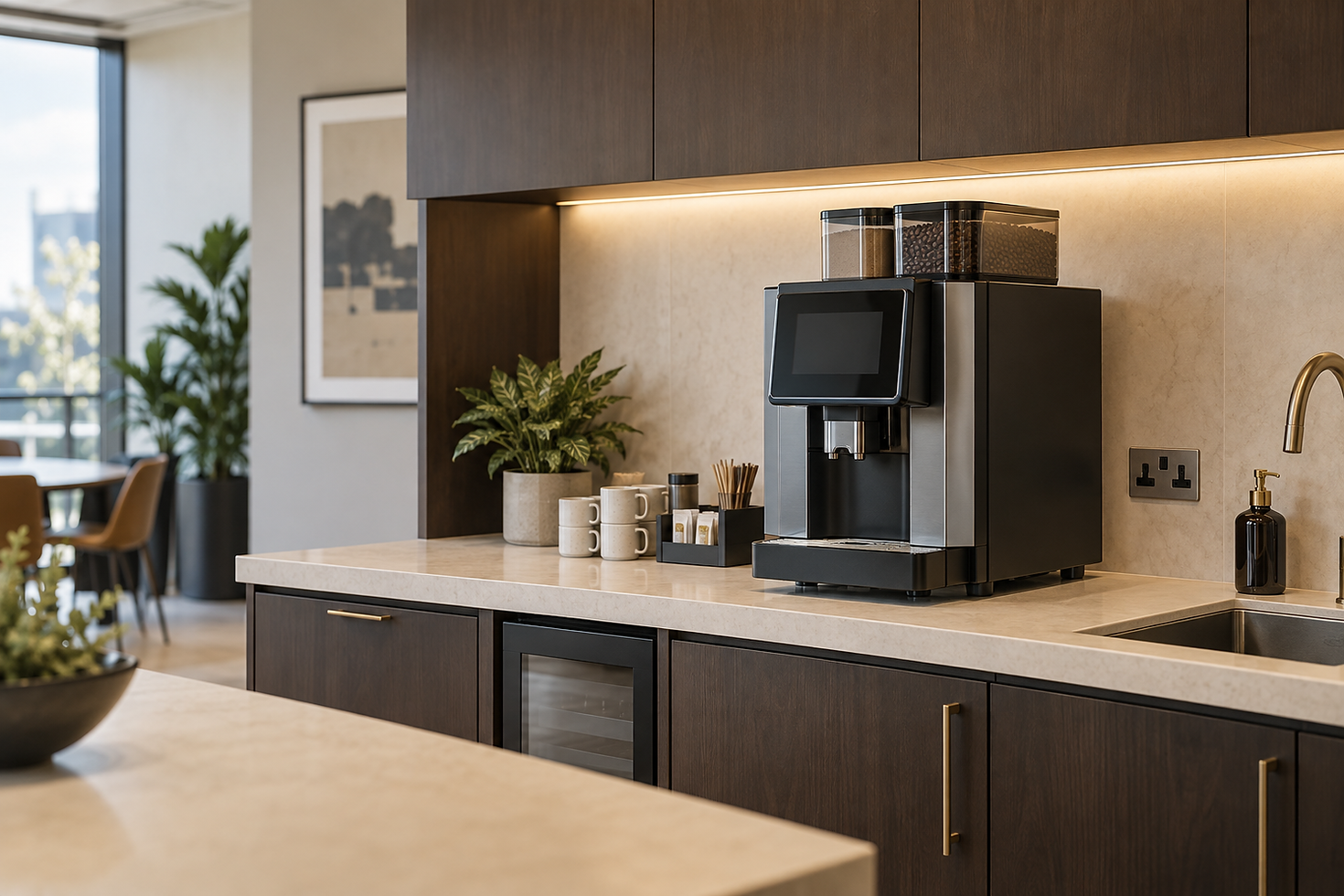
Can an Office Coffee Machine Be Installed in Your Kitchen? A 2-Minute Site Check

Updated: Sep 21
A plumbed-in office coffee machine can often be installed in an existing workplace kitchen without a separate survey visit. The key is not simply whether there is a sink. OBS needs to understand the machine position, usable counter space, power, the nearest cold-water connection and a practical route for the small water line.
This guide explains what a normal UK office bean-to-cup installation involves, what can complicate it, and when photographs are enough for a preliminary assessment. The checker in the middle of the guide turns those details into one clean record for the OBS team.
The quick answer
Most office kitchens, tea points and breakout areas are suitable for either a tank-fed or plumbed bean-to-cup coffee machine. A straightforward plumbed installation normally has a firm, level counter; appropriate clearances; a suitable electrical socket; accessible cold-water pipework nearby; and a route for the water line that does not create a trip hazard or damage services.
Some machines also need a drain or waste connection, while many office bean-to-cup models use an internal drip tray and do not. The exact requirement depends on the selected machine, its configuration and the way it will be used.
The most useful starting point is simple: “Show us where you’d like the machine and we’ll work out what’s required.” OBS can often review a straightforward site from photographs and a few focused questions. That is a preliminary assessment, not a guarantee of suitability or final installation approval.
Tank-fed or plumbed-in: which installation are you considering?
Tank-fed machines
A tank-fed machine is filled manually. It still needs safe positioning, suitable power, enough counter space and room to refill the reservoir, empty the drip tray and carry out daily cleaning. It usually avoids a fixed water connection, so it can suit smaller offices, rented premises or locations where modifications are restricted.
The trade-off is routine staff involvement. Someone must keep the water tank filled, and busier teams may find the interruptions inconvenient. Water quality still matters; the machine manufacturer’s guidance should be followed.
See tank-fed examples such as the JURA W4 and
Plumbed-in machines
A plumbed machine takes a dedicated feed from the building’s cold-water supply, normally through an approved isolation valve and filtration arrangement. It avoids manual refilling and is often the more practical choice for larger teams or higher daily drink volumes.
Plumbed-in does not necessarily mean a disruptive building project. A qualified installer may be able to route a small food-grade water line discreetly through adjacent cupboards, behind units or through a carefully positioned opening. The route and any drilling must be agreed before work starts.
Browse OBS office coffee machines to compare capacity, milk systems and water options.
Seven things OBS checks before installation
1. The proposed machine position
The machine needs a stable, level surface that can safely support its operating weight. The position should leave sensible working space around the machine and should not block doors, walkways, fire routes, ventilation grilles or access to other appliances.
Avoid placing the machine immediately beside a hob, above a dishwasher or where steam, heat or direct sunlight could affect it. Users also need room to queue, prepare drinks and remove waste without colliding with other kitchen activity.
2. Worktop size and clearances
Check the machine’s full width, depth and height against the available surface. Allow extra depth for plugs, hoses and ventilation, plus height for opening bean hoppers, powder canisters or water-tank lids. If cupboards sit above the counter, photograph them open and closed.
The counter should be sound and rigid. A domestic-looking worktop can be perfectly suitable, but OBS may need to check unsupported spans, loose surfaces, narrow shelves or furniture not designed for a commercial appliance.
3. Electrical supply
Most office bean-to-cup machines require a nearby mains socket with the correct rating for that model. The final electrical requirement must come from the machine specification. An extension lead should not be treated as a permanent installation solution.
Photographs should show the socket and the proposed machine position together where possible. If the socket is inside a cupboard or shared with another high-load appliance, mention that in the checker.
4. Cold-water connection and filtration
For a plumbed machine, the usual source is accessible cold-water pipework beneath a nearby sink. The installer needs to confirm that the supply is suitable and identify an appropriate connection point. A dedicated isolation valve allows the machine supply to be shut off without affecting the rest of the kitchen.
Filtration helps protect the machine and can improve drink consistency. The correct filter depends on local water conditions, machine specification and expected usage. It needs enough accessible space for installation and future cartridge changes.
5. A safe route for the water line
The shortest practical route is often inside the same cupboard or through neighbouring cabinets. Where required and permitted, a small opening may be drilled through a cabinet side, plinth or worktop. The installer must avoid electrical cables, pipework, structural elements and vulnerable surfaces.
A loose water line should never cross an open floor or create a snagging hazard. Longer, concealed or awkward routes may need plumbing or fit-out work before the coffee machine engineer attends.
6. Drainage or waste, where relevant
Not every office bean-to-cup machine needs a fixed drain. Many collect rinse water in an internal drip tray; other configurations benefit from or require a waste connection. OBS will verify this against the selected machine rather than applying one rule to every model.
Where a drain is required, the route, fall, trap and connection point must be suitable. A sink nearby does not automatically mean a compliant waste route is available.
7. Permission and building constraints
In a rented office, serviced workspace or managed building, even a small cabinet opening or fixed pipe connection may require landlord or facilities approval. Heritage finishes, stone worktops, fire compartmentation, asbestos-management plans and restricted risers can also affect what is permitted.
If modification is not allowed, OBS can consider a tank-fed machine, a different position or a route that avoids fixed changes.
Not sure whether your office is ready for a plumbed coffee machine?
Check your site in around 2 minutes. The checker asks one question at a time and lets you take or upload the photographs OBS actually needs. You will receive a useful preliminary result before OBS reviews the submission.
What your preliminary result means
Looks straightforward
The information supplied indicates that the basic requirements appear to be present. OBS still reviews the photographs, checks the proposed machine specification and confirms the installation scope before anything is approved.
We need to check a couple of things
One or more details are unclear or need a human review. This can be as simple as confirming a socket, understanding the inside of a cupboard or matching drainage requirements to the chosen machine. It does not mean the installation is unsuitable.
A site visit may be required
The answers suggest that enabling works, an alternative position or an onsite survey could be sensible. OBS will explain what needs checking and why. A visit is recommended only where it adds value, not as an automatic extra step.
What counts as a straightforward installation?
A level, load-bearing counter with enough width, depth and overhead clearance.
A suitable nearby socket that does not rely on a permanent extension lead.
Accessible cold-water pipework near the proposed position for a plumbed machine.
A short, protected route for the water line through the same or adjacent cabinetry.
Permission for any small, agreed cabinet or worktop opening that may be needed.
Enough accessible space for the filter, isolation valve, cleaning and servicing.
A confirmed drainage plan if the selected machine actually requires one.
The final scope may still include standard installation components such as an isolation valve, filter head, cartridge, food-grade hose and secure fittings. OBS will set this out against the selected machine and site.
When additional plumbing or enabling works may be needed
There is no accessible cold-water supply near the proposed position.
The only route crosses an open floor, doorway or circulation area.
Pipework is boxed in or access is blocked by fixed units.
The available socket is unsuitable, overloaded or too far away.
A waste connection is required but there is no practical gravity route.
A stone, metal or specialist worktop needs an approved trade to make an opening.
The landlord, building manager or fit-out contractor must approve modifications.
The machine is part of a larger refurbishment with coordinated electrical, plumbing or joinery works.
If the machine is part of a refurbishment, see OBS guidance on office coffee machines for fit-out projects.
How to take photographs that help OBS decide
Good photographs can remove guesswork and often avoid a separate survey journey. Use natural light or the phone flash, hold the camera steady and include enough of the room for the location to make sense.
Position photo: stand in front of the exact place and show the full counter.
Wider photo: include surrounding cupboards, sockets, sink and access route.
Cupboard photo: open the cupboard below or nearest the proposed position.
Pipework photo: show the cold-water pipes and any isolation valves beneath the sink.
Detail photo: add a close-up of any obstruction, unusual worktop, boxed-in service or possible route.
Do not remove panels, disconnect appliances or disturb pipework just to take a photograph. If an area is inaccessible, say so in the notes and OBS will advise what happens next.
When a physical site survey is worth doing
A visit may be sensible where photographs cannot show a concealed route, the installation crosses rooms, a fixed waste is essential, building rules are strict, access is unusually constrained or several trades must coordinate. High-volume machines, unusual power requirements and complex refurbishment programmes can also justify an onsite survey.
OBS will not treat the checker as an automatic approval. The photographs and answers support a remote review; final suitability rests with OBS and, where relevant, the installing engineer and site’s authorised representatives.
Choosing the machine at the same time
Installation feasibility and machine choice should be considered together. A compact tank-fed model, a plumbed high-capacity machine and a fresh-milk system can create different space, service and cleaning requirements.
If you are not sure which model fits your team, use the OBS Machine Finder. It will narrow the options by workplace size, drink preferences and practical requirements.
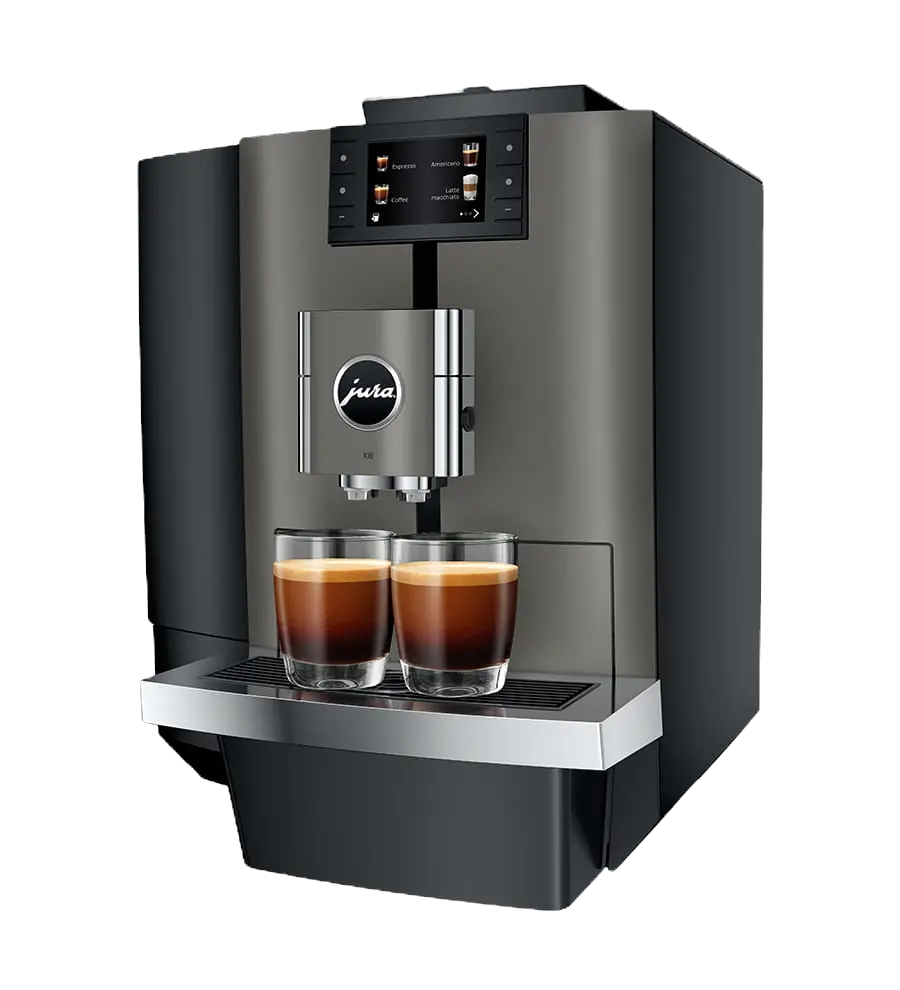
Already comparing plumbed machines? Explore the JURA X10, Gaggia G100, Gaggia G300, JURA GIGA X3, JURA GIGA X8 and Gaggia G700.
Frequently asked questions
Does an office coffee machine need plumbing?
No. Some office bean-to-cup machines use a manually filled water tank. Plumbed models are connected to a cold-water supply and are usually more convenient for busier workplaces. The right choice depends on expected use, available services and permission to make fixed changes.
How close must a plumbed coffee machine be to a water supply?
There is no single distance that applies to every site. A short, accessible route from cold-water pipework beneath a nearby sink is usually simplest. Longer routes can be possible, but they need protection, sensible access and approval. OBS checks the route rather than relying on distance alone.
Does every plumbed bean-to-cup machine need a drain?
No. Many office bean-to-cup machines collect rinse water in an internal drip tray. Some models or operating configurations require or benefit from a waste connection. OBS confirms this from the exact machine specification.
Can the water pipe run through kitchen cupboards?
Often, yes. Routing a small food-grade line through the same or adjacent cupboards can be neat and practical. The route must be secure, accessible where necessary and kept clear of hazards. Any drilling should be agreed and completed by an appropriate person.
Can OBS assess the installation from photographs?
Often, yes. Clear photographs plus the checker answers can be enough for OBS to give a preliminary assessment and identify likely requirements. Photographs do not guarantee final approval, and OBS may request another image, a measurement or a site visit.
Who drills the worktop or cabinetry?
That depends on the material, route and agreed installation scope. Standard cabinetry may be dealt with as part of the installation where appropriate. Stone, metal, specialist finishes or building-controlled work may require the landlord, fit-out contractor or a specialist trade.
What if our office is rented or managed?
Check the lease, fit-out guide or building-management rules before authorising fixed changes. The checker flags where approval may be required. If drilling or a new connection is not permitted, OBS can consider a tank-fed model or another position.
When is a physical coffee machine site survey necessary?
A survey is most useful when services are concealed, the route is complex, a drain or electrical alteration is needed, the work forms part of a coordinated fit-out, or photographs cannot establish the risks. Straightforward sites can often be reviewed remotely first.
Ready to take the next step?
Complete the checker above if you have a proposed position. OBS will receive the answers, preliminary assessment and photographs as one installation record, then review what is required.
Need help choosing? Start with Find My Machine.
Already know what you want? Build My Quote and carry your machine choice into the next conversation with OBS.
Comments