
The Complete Office Relocation Checklist (2026 UK Guide)

Updated: Sep 21
Everything Facilities Managers, Office Managers and Workplace Teams Need to Plan a Smooth Office Move

Moving offices is exciting.
It's also one of the busiest and most demanding projects a business can undertake.
Between coordinating removals, managing contractors, arranging internet installation, ordering furniture and keeping employees informed, it's easy for smaller details to slip through the cracks.
Unfortunately, those "small" details often become the biggest headaches once staff arrive in the new office.
At Office Brew Solutions, we regularly speak with businesses that are relocating their offices across the UK. One thing we've noticed time and time again is that workplace facilities—particularly the office kitchen and coffee setup—are often left until the final weeks before moving day.
By then, options are limited, installation dates are harder to secure and decisions become rushed.
This guide has been created to help Facilities Managers, Office Managers and Workplace teams avoid those last-minute surprises.
Whether you're moving 20 employees or 500, this checklist will help you stay organised and ensure your new workplace is ready from day one.
Contents
Create Your Office Move Plan
Design the Workplace Around Your People
Planning Your Office Coffee Station
Choosing the Right Office Coffee Machine
Budgeting for Your Office Move
Installation and Moving Week
10 Common Office Relocation Mistakes (And How to Avoid Them)
Printable Office Relocation Checklist
Frequently Asked Questions
1. Create Your Office Move Plan
The most successful office moves don't happen because everything goes perfectly.
They happen because somebody is responsible for making sure everything stays on track.
If multiple people are ordering furniture, arranging internet, speaking with contractors and booking suppliers independently, communication quickly becomes difficult.
Instead, appoint one person to oversee the project from start to finish.
This doesn't mean they have to do everything themselves.
It simply means every supplier knows exactly who to contact if plans change.
Typical suppliers involved in an office move
Removal company
IT provider
Internet provider
Furniture supplier
Electrical contractor
Plumber
Cleaning company
Security & access control
Signage company
Coffee supplier
Water cooler supplier
Creating one shared project timeline with target dates for each supplier helps prevent delays and last-minute surprises.
Don't leave workplace facilities until last
One mistake we regularly see is that workplace facilities are treated as one final job after everything else has been completed.
In reality, they're connected to almost every stage of the fit-out.
For example:
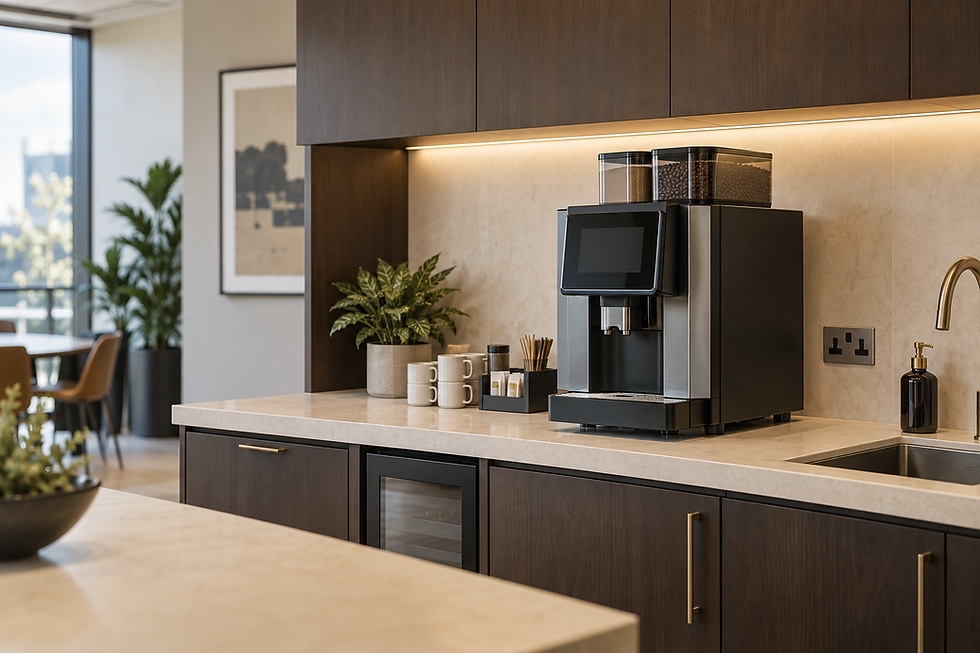
Coffee machines may require plumbing.
Larger machines may require dedicated electrical supplies.
Cupboards need enough clearance for refilling beans and cleaning.
Waste bins and milk fridges need somewhere practical to live.
Staff need somewhere to gather from day one.
Planning these requirements early avoids expensive changes later.
Pro Tip
Think about the employee experience—not just the building.
The first coffee your team enjoys in the new office might sound like a small detail, but after weeks of packing, moving and disruption, it often becomes one of the first moments where the new workplace finally feels like home.
Related Reading
Choosing the Right Office Coffee Machine Capacity
Choosing a machine purely based on employee numbers often leads to overspending or buying something too small. Learn how daily drink volumes and hybrid working affect machine selection.
Planning an Office Coffee Machine Installation
Before ordering any equipment, make sure you've considered plumbing, drainage, power requirements and cupboard clearance.
2. Design the Workplace Around Your People
When businesses move office, it's natural to focus on desks, meeting rooms and floor plans.
But one area that often has the biggest impact on employee satisfaction is the kitchen.
Think about how your team actually uses the space each day.
Do people grab a quick coffee between meetings? Do they eat lunch together? Is the kitchen somewhere people naturally stop for a chat, or simply somewhere to fill a kettle?
A well-planned kitchen can become one of the most valuable spaces in your office. It encourages collaboration, gives staff a place to recharge and often becomes the hub of the workplace.
Before ordering any equipment, ask yourself a few simple questions.
How many people will regularly be in the office?
Hybrid working has changed everything.
A company with 150 employees may only have 70 people in the office on a typical Tuesday, while another company with 50 employees may have everyone in every day.
Don't size your kitchen based purely on total headcount. Instead, think about your busiest days.
How do your staff drink coffee?
This sounds obvious, but it can make a huge difference.
Questions worth asking include:
Do most people drink black coffee or milk-based drinks?
Is decaf becoming more popular?
Do visitors regularly ask for cappuccinos or flat whites?
Would hot chocolate be appreciated?
Do you need tea and hot water on demand?
Understanding these habits helps determine the right type of machine long before anyone starts requesting quotations.
Where will people queue?
Most office kitchens become busiest at roughly the same times.
First thing in the morning
Mid-morning break
After lunch
If the coffee machine sits directly beside the microwave or fridge, queues quickly build and people end up blocking each other.
Whenever possible, leave enough space around the machine for two or three people to use the area comfortably.
A few extra centimetres during the planning stage can make the kitchen feel far less crowded every day.
Think beyond today
If you're relocating to support business growth, don't design the kitchen for today's workforce alone.
Ask yourself:
Will you recruit over the next two years?
Will office attendance increase?
Will more client meetings take place?
Could another coffee point be needed in future?
Choosing equipment with a little spare capacity is often much more cost-effective than replacing it after only a year or two.
Don't Forget the Practicalities
The kitchen layout should also make everyday maintenance as easy as possible.
Think about:
Where milk will be stored.
Where cups, sugar and stirrers will live.
Easy access to waste bins.
Space to empty coffee grounds.
Cleaning products.
Access for engineers if servicing is ever required.
A beautiful kitchen isn't much use if somebody has to move half the room just to refill coffee beans.
The Most Common Mistake We See
One of the biggest mistakes businesses make is choosing a coffee machine before they've finalised the kitchen design.
The machine influences:
Worktop space
Cupboard heights
Water supply
Drainage
Electrical sockets
Milk fridge location
Leaving these decisions until the final weeks before moving can result in expensive alterations or compromise the type of machine you can install.
We always recommend planning the coffee area at the same time as the kitchen—not after it's been built.
Planning for Different Office Sizes
Small offices (10–30 people)
A single coffee point is usually enough, but think carefully about future growth and client visits. Tank-fed machines may offer greater flexibility if plumbing isn't available.
Medium offices (30–100 people)
This is where demand can increase quickly, especially during morning and lunch breaks. Capacity, speed and drink variety become much more important.
Larger workplaces (100+ people)
Multiple coffee points often work better than one large machine. Spreading demand across different areas reduces queues and makes refreshments more accessible for staff.
Related Reading
How to Choose the Right Office Coffee Machine Capacity
Not sure how many drinks your office actually needs? Our guide explains how to size a machine based on daily usage rather than simply employee numbers.
Quick Tip
If you're already working with an office fit-out company or workplace designer, involve your coffee supplier before the kitchen drawings are signed off.
It costs nothing to ask the question, but it could save thousands of pounds in alterations later.
3. Planning Your Office Coffee Station
Most businesses spend weeks choosing desks, meeting rooms and breakout spaces.
The coffee station often gets whatever space is left over.
Unfortunately, that's where problems begin.
We've seen brand-new office kitchens where the coffee machine doesn't fit under the cupboards, there aren't enough sockets, or engineers can't even remove the drip tray because it's hard against a wall.
Getting the coffee area right isn't complicated—but it does need a little planning before the kitchen is built.
Start with the Location
Think about how your team moves around the office.
The coffee machine should be:
Easy to find for visitors.
Convenient for employees.
Close to the kitchen, but not blocking walkways.
Accessible without creating queues.
If your office has over 100 people, it may even be worth considering two coffee points instead of one large machine.
That often reduces waiting times and encourages people to use different areas of the office.
Leave Enough Space Around the Machine
This is one of the most overlooked parts of an installation.
Many bean-to-cup coffee machines require extra clearance above the machine to refill coffee beans or powdered milk.
Engineers also need room to:
Remove brew groups.
Empty waste containers.
Change water filters.
Carry out servicing.
Access the rear connections.
We've seen machines installed perfectly... only to discover someone has to move the entire machine every week just to refill it.
Before ordering a machine, always check:
Worktop depth.
Height beneath wall cupboards.
Side clearance.
Rear access.
Door opening direction.
A few minutes with a tape measure can prevent a lot of frustration later.
Related Reading
Before installation, read our guide to Planning an Office Coffee Machine Installation, where we explain the most common mistakes businesses make and how to avoid them.
Tank-Fed or Plumbed?
This is one of the first questions we'll usually ask.
Neither option is "better"—it depends on your office.
Tank-fed machines
These use an internal water tank that staff refill manually.
Advantages
No plumbing required.
Faster installation.
Easy to relocate.
Ideal for serviced offices or temporary locations.
Considerations
Someone needs to refill the tank.
More maintenance for busy offices.
Can become inconvenient as drink volumes increase.
Plumbed machines
These connect directly to your mains water supply through a filtration system.
Advantages
No manual filling.
Consistent water quality.
Better suited to busy workplaces.
Less interruption during the day.
Considerations
Plumbing required.
Installation needs planning.
Slightly higher installation cost.
For many offices serving 60–100+ drinks per day, a plumbed machine quickly becomes the more practical solution.
Don't Forget Water Filtration
The coffee machine is only as good as the water running through it.
Hard water causes limescale to build up inside the machine, affecting both performance and drink quality.
A suitable filtration system can:
Improve coffee flavour.
Reduce limescale.
Extend machine life.
Reduce servicing costs.
Improve drink consistency.
If you're relocating, this is the perfect time to install the correct filtration rather than adding it later.
Fresh Milk or Powdered Milk?
There's no universal answer.
It depends on your priorities.
Fresh milk
Best for:
Premium coffee experience.
Client-facing offices.
Businesses where coffee quality is a priority.
Pros
Excellent milk texture.
Premium cappuccinos and flat whites.
Strong visual impression.
Things to consider
Daily cleaning.
Milk storage.
Refrigeration.
Slightly higher maintenance.
Powdered milk
Best for:
High-volume offices.
Lower maintenance.
Maximum convenience.
Pros
Minimal daily cleaning.
No refrigeration.
Longer shelf life.
Very consistent drinks.
Modern powdered milk systems have improved dramatically and often surprise people who haven't tried one for several years.
The right choice depends on your team's priorities rather than assuming one option is always superior.
Electrical Requirements
This is another area that's often forgotten until installation day.
Ask your kitchen designer:
Where are the sockets?
Are they above the worktop?
Will cables be visible?
Is there enough capacity for additional equipment?
Will the machine share a circuit with kettles or microwaves?
Planning this early creates a cleaner, safer installation.
Think About the Entire Coffee Experience
A great coffee station isn't just a coffee machine.
Think about:
Cup storage.
Sugar and sweeteners.
Stirrers.
Tea.
Hot chocolate.
Recycling.
General waste.
Milk fridge.
Cleaning materials.
Hand towels.
The goal is for someone to make a drink without walking backwards and forwards across the kitchen.
Our Advice
If you're planning a new office, don't wait until the kitchen has been built before choosing your coffee solution.
It doesn't mean you need to order immediately.
It simply means you can design the space around how your team will actually use it.
That usually results in:
A cleaner installation.
Better workflow.
Fewer compromises.
Lower installation costs.
A better experience for employees.
Pro Tip
Don't assume your kitchen designer or fit-out contractor understands commercial coffee equipment. They're experts in creating great workspaces, but they may not know the specific clearance, plumbing or maintenance requirements of bean-to-cup machines. A quick conversation with your coffee supplier before the kitchen is signed off can prevent costly alterations later.
4. Choosing the Right Office Coffee Machine
Once you've planned your office kitchen, the next step is choosing a coffee machine that suits your business.
This is where many companies make an expensive mistake.
Rather than looking at how their office actually operates, they compare specifications or simply choose the cheapest quotation.
The result?
A machine that's either too small for demand, unnecessarily expensive, or lacking the features employees actually want.
The best coffee machine isn't necessarily the biggest or the most expensive. It's the one that fits your workplace.
Don't Choose Based on Employee Numbers Alone
One of the first questions we're asked is:
"We have 80 employees. What machine do we need?"
The honest answer is...
It depends.
A company with 80 employees working in the office five days a week has completely different requirements from a business where only 30 people attend each day.
Instead, think about:
Average daily attendance
Daily coffee consumption
Number of visitors
Client meetings
Peak break times
Hybrid working
Future recruitment
These factors tell us far more than headcount alone.
Think About the Drinks People Actually Want
Modern bean-to-cup coffee machines can produce much more than espresso.
Ask yourself:
Does your team drink mostly black coffee?
Are cappuccinos and flat whites popular?
Is decaf important?
Do you need hot chocolate?
Is hot water for tea essential?
The answers help narrow down the right machine long before you start comparing brands.
Fresh Milk or Powdered Milk?
This is one of the biggest decisions you'll make.
Fresh milk generally produces the most authentic milk texture and is a popular choice for client-facing offices where coffee quality is a priority.
Powdered milk systems require less day-to-day attention and can be ideal for busy workplaces looking for convenience and consistency.
Neither is right or wrong—it depends on your priorities, available maintenance time and the experience you want to provide.
Consider Future Growth
If you're moving office, chances are your business is growing.
Choosing a machine that's already operating at full capacity on day one may mean replacing it much sooner than expected.
It's often more cost-effective to invest in a little extra capacity now than upgrade again in two years' time.
Which Machine Might Suit Your Office?
Every workplace is different, but these examples provide a useful starting point.
Small offices (10–30 people)
For smaller teams looking for high-quality bean-to-cup coffee, compact machines often provide more than enough capacity without taking up excessive worktop space.
Recommended options
Jura W8
Jura X4
Saeco Magic M2+
Gaggia G100
Medium offices (30–80 people)
As staff numbers grow, drink variety and speed become more important.
This is where machines capable of producing speciality coffees quickly really come into their own.
Recommended options
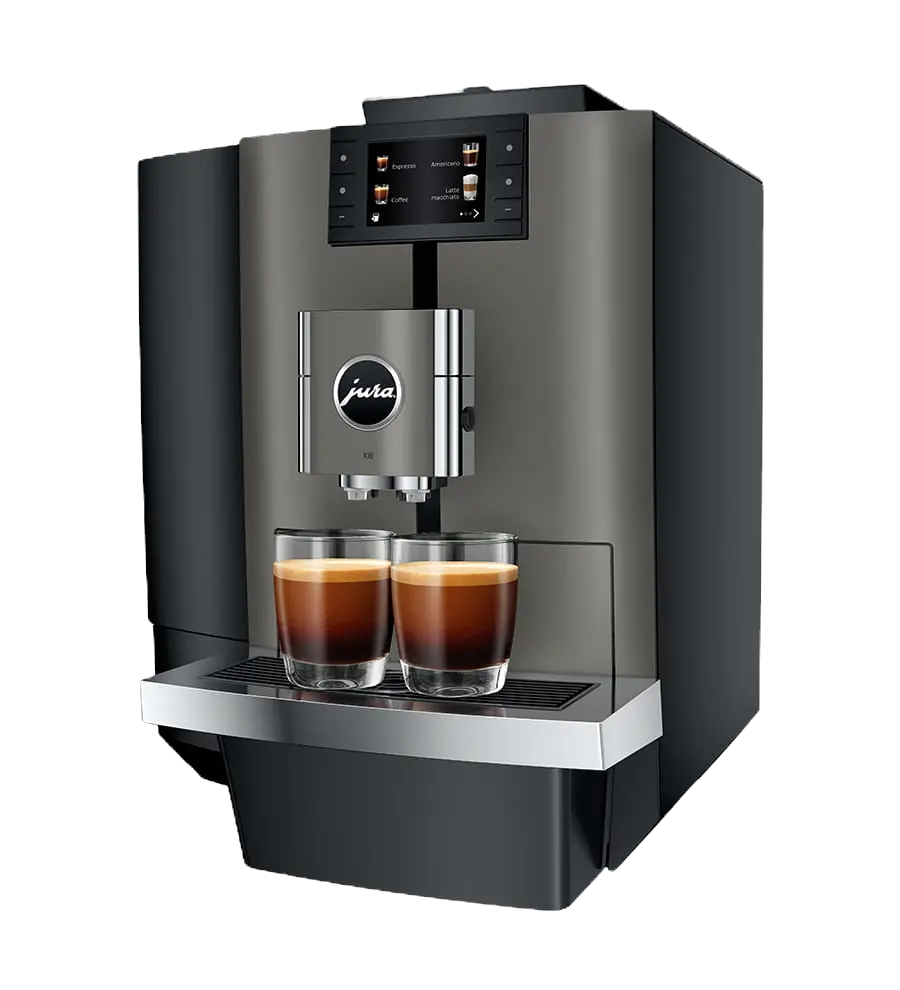
Jura X10
Jura X8
Gaggia G300
The Jura X10 is particularly popular with offices looking to offer premium speciality coffee while keeping operation simple for employees.
Larger offices (80–200+ people)
High-volume workplaces need equipment designed for continuous use.
Features such as direct water connection, larger bean hoppers and faster drink production become increasingly important.
Recommended options
Jura GIGA X3c Gen II
Jura GIGA X8c Gen II
Gaggia G700
These machines are designed specifically for demanding commercial environments where reliability and capacity matter.
Don't Buy Features You Won't Use
It's easy to become distracted by long feature lists.
Ask yourself:
Will staff actually use 30 drink options?
Do you need two bean hoppers?
Is a touchscreen important?
Would telemetry help monitor usage across multiple sites?
Is a direct water connection worthwhile?
Sometimes a simpler machine provides a better experience and lower running costs.
Think Beyond the Purchase Price
The cheapest quotation isn't always the lowest-cost solution.
When comparing machines, consider:
Installation costs
Water filtration
Cleaning requirements
Servicing
Energy efficiency
Consumables
Warranty
Expected lifespan
Looking at the total cost of ownership usually provides a much clearer picture than focusing on the machine price alone.
Leasing vs Buying
If you're relocating, you may already be investing heavily in furniture, IT equipment and office fit-out.
Leasing a coffee machine allows many businesses to spread the cost into predictable monthly payments rather than making another large capital purchase.
For some companies, this helps preserve cash flow during an already expensive relocation project.
Related reading
Compare the advantages of both options in our guide to Should You Lease or Buy an Office Coffee Machine? https://www.officebrewsolutions.co.uk/post/lease-vs-buy-office-coffee-machine
Our Advice
Don't choose a machine because it's the most expensive.
Don't choose one because it's the cheapest either.
Choose one that suits:
Your team
Your office layout
Your expected daily demand
Your budget
Your future plans
That's the approach we take with every business we work with, because the right recommendation today should still be the right recommendation several years from now.
5. Budgeting for Your Office Move
Relocating your office is a significant investment, and while most businesses carefully budget for furniture, IT equipment and fit-out costs, it's often the smaller operational expenses that are overlooked.
These aren't necessarily expensive individually, but together they can have a noticeable impact on your relocation budget if they aren't planned from the outset.
The earlier you understand these costs, the easier it becomes to compare suppliers accurately and avoid unexpected surprises during the final weeks before moving in.
The Typical Costs of an Office Relocation
Every business is different, but an office move often includes costs such as:
Commercial removal company
Office fit-out and decoration
Furniture
IT equipment and network installation
Internet and telecommunications
Security systems and access control
Signage and branding
Cleaning
Staff relocation and communication
Kitchen equipment
Coffee facilities
Most of these items are obvious and are usually included in the initial project budget.
However, it's the last few that are often underestimated.
Coffee Facilities Are Frequently Left Until Last
In our experience, the office coffee machine is often one of the final decisions made during an office relocation.
By this stage:
The kitchen has already been designed.
Worktops have been installed.
Plumbing has been completed.
Electrical contractors have finished.
The move-in date is approaching quickly.
At this point, you're no longer choosing the best solution.
You're choosing the solution that will fit what's already been built.
Planning your coffee facilities alongside the rest of the kitchen design gives you far more flexibility and usually results in a better long-term solution.
Compare More Than Just the Purchase Price
When requesting quotations, avoid comparing suppliers on price alone.
A cheaper quotation isn't always the better value.
Instead, ask exactly what's included.
For example:
Delivery
Installation
Water filtration
Plumbing requirements
Commissioning
Staff training
Warranty
Ongoing servicing
Replacement filters
Cleaning products
Two quotations that initially appear similar can be very different once these items are taken into account.
Buying vs Leasing
If you're relocating offices, there's a good chance you're already investing heavily in furniture, technology and office improvements.
Many businesses therefore choose to lease their coffee machine rather than making another capital purchase.
Leasing can provide:
Predictable monthly costs.
Improved cash flow.
The ability to invest elsewhere during the relocation.
Access to higher-specification equipment without a large upfront payment.
Purchasing outright may still be the right option for businesses with available capital or those looking to own the equipment from day one.
There isn't a universal answer—it depends on your budget, business objectives and cash flow.
Think About Running Costs
The machine itself is only one part of the overall investment.
It's also worth considering the ongoing operating costs.
These may include:
Coffee beans
Fresh or powdered milk
Water filters
Cleaning tablets
Descaling products
Preventative servicing
Replacement parts
A high-quality commercial coffee machine should provide many years of reliable service, making the total cost of ownership a much more useful comparison than simply looking at the purchase price.
Don't Forget Employee Experience
Budget discussions naturally focus on costs.
It's also worth considering value.
For many employees, the coffee machine is one of the first things they use every morning.
It supports informal conversations, client meetings and short breaks throughout the day.
Choosing reliable equipment that consistently delivers great coffee can contribute to a better workplace experience and reduce frustration caused by queues, breakdowns or poor drink quality.
It's a relatively small investment compared with the overall cost of relocating an office, but one that's noticed every single day.
Questions to Ask Before Choosing a Supplier
Before accepting any quotation, make sure you understand:
Is delivery included?
Is installation included?
Is water filtration included?
Is staff training provided?
What warranty is included?
Are ongoing servicing options available?
Will the machine still meet your needs if your business grows?
Are there any ongoing costs not included in the quotation?
A transparent quotation should clearly explain what's included, helping you compare suppliers with confidence.
Related Articles
If you're currently planning your relocation budget, these guides may also help:
➡ How Much Does an Office Coffee Machine Cost? https://www.officebrewsolutions.co.uk/post/how-much-does-an-office-coffee-machine-cost-in-the-uk
➡ Should You Lease or Buy an Office Coffee Machine? https://www.officebrewsolutions.co.uk/post/lease-vs-buy-office-coffee-machine
➡ Planning an Office Coffee Machine Installation https://www.officebrewsolutions.co.uk/post/how-to-choose-office-coffee-machine
Office Brew Solutions Tip
The cheapest coffee machine isn't always the lowest-cost solution.
Equally, the most expensive machine isn't always the best choice.
The right solution is the one that fits your office, your team and your long-term plans.
That's why we always recommend discussing your requirements before comparing models. A short conversation early in your office relocation can often save both money and unnecessary compromises later.
6. Installation and Moving Week
By the time moving week arrives, your office should be coming together.
Furniture is being delivered, internet is being tested and the final boxes are being unpacked.
This is also when many businesses realise they've left their coffee facilities until the last minute.
Unfortunately, rushing the installation can lead to delays, unnecessary costs and a poor first impression when employees arrive at the new office.
With a little planning, this can be avoided entirely.
Aim to Install Before Staff Arrive
Your coffee machine shouldn't be one of the last things to arrive.
Ideally, it should already be installed, tested and ready to use before employees walk through the door.
This allows time to:
Test every drink option.
Check water pressure.
Confirm milk systems are working correctly.
Install and flush water filters.
Adjust drink recipes if required.
Train key members of staff.
Resolve any unexpected issues before opening.
Moving day is stressful enough without trying to troubleshoot equipment at the same time.
Check the Installation Area
Before your supplier arrives, carry out one final inspection.
Confirm that:
The worktop has enough space.
There is sufficient clearance above the machine.
Power sockets are accessible.
Plumbing has been completed (if applicable).
Water filtration has been installed.
Drainage connections are ready (where required).
Engineers have clear access.
These small checks can prevent installation delays and unnecessary return visits.
Don't Forget Staff Training
Modern bean-to-cup coffee machines are designed to be simple to use, but a short demonstration can make a big difference.
Show employees:
How to select drinks.
How to refill beans.
Basic daily cleaning.
Emptying the drip tray.
Emptying coffee grounds.
What to do if the machine displays a warning message.
Spending just fifteen minutes with key members of staff can reduce unnecessary service calls later.
Stock the Kitchen Before Day One
It sounds obvious, but it's surprisingly common for businesses to move into a new office with an empty kitchen.
Before opening, make sure you have:
Coffee beans
Tea
Sugar and sweeteners
Fresh or powdered milk
Disposable or reusable cups
Stirrers
Cleaning products
Paper towels
Water filters (if required)
There's nothing worse than proudly switching on a brand-new coffee machine and realising there are no beans.
Think About Your Visitors Too
Your coffee station isn't just for employees.
For many businesses, it's one of the first things clients experience when they visit your office.
A reliable coffee machine helps create a professional first impression and gives reception staff confidence when offering refreshments during meetings.
It's a small detail that often leaves a lasting impression.
Plan for Ongoing Maintenance
A commercial coffee machine is a hardworking piece of equipment.
Like any appliance used every day, it performs best when looked after properly.
Create a simple routine covering:
Daily
Empty coffee grounds.
Empty drip tray.
Wipe external surfaces.
Check bean levels.
Refill milk where required.
Weekly
Complete any recommended cleaning cycles.
Empty waste containers.
Clean milk systems thoroughly.
Periodically
Replace water filters.
Arrange preventative servicing.
Review drink settings if usage changes.
Keeping on top of these simple tasks helps maintain drink quality and reduces downtime.
After the Move
Once your business has settled into its new office, it's worth reviewing how the coffee area is working.
Ask yourself:
Are queues forming at busy times?
Is the machine meeting demand?
Are employees using the drinks available?
Is the layout working well?
Would another coffee point improve staff flow?
Small adjustments during the first few weeks can make a significant difference to the overall workplace experience.
Office Brew Solutions Tip
A successful installation isn't measured by how quickly the machine is delivered.
It's measured by how smoothly everything works on the first morning your employees arrive.
Planning ahead gives your supplier time to prepare properly, allows your team to settle in quickly and helps ensure your new workplace starts exactly as intended.
7. 10 Common Office Relocation Mistakes (And How to Avoid Them)
Even the most carefully planned office relocations can run into unexpected problems.
After speaking with businesses across the UK, we've noticed the same mistakes appear time and time again.
The good news is that almost all of them can be avoided with a little planning.
Mistake 1 – Leaving the Kitchen Until the End
When planning a new office, most attention naturally goes towards desks, meeting rooms and IT infrastructure.
The kitchen is often treated as a finishing touch.
Unfortunately, this is where many compromises begin.
Once worktops, cupboards and plumbing have been completed, your options become much more limited.
How to avoid it
Plan your kitchen alongside the rest of the office fit-out—not after it's finished.
Mistake 2 – Choosing a Coffee Machine Based Only on Headcount
"We've got 80 employees."
That's useful information, but it doesn't tell the whole story.
Questions that matter even more include:
How many people are in the office each day?
Do you regularly host visitors?
Are Mondays and Fridays quieter?
Does everyone drink coffee?
The right machine is based on daily usage, not simply the number of employees on payroll.
Mistake 3 – Forgetting About Future Growth
Many businesses move because they've outgrown their existing office.
It therefore makes little sense to install equipment that's already operating close to capacity on day one.
If you're planning to recruit over the next few years, it's often worth choosing equipment that allows room to grow.
Mistake 4 – Not Measuring the Space Properly
This happens far more often than people realise.
The machine physically fits on the worktop...
...but nobody checked whether there was enough room above it to refill coffee beans or remove components for cleaning.
Before ordering any equipment, measure:
Height
Width
Depth
Cupboard clearance
Rear access
Side clearance
Five minutes with a tape measure can prevent weeks of frustration.
Mistake 5 – Forgetting Plumbing and Power Requirements
Some coffee machines require:
A mains water connection.
Water filtration.
Drainage.
Dedicated electrical supplies.
Discovering this after contractors have left can result in unnecessary costs and delays.
Always discuss installation requirements before finalising your kitchen design.
Mistake 6 – Comparing Price Instead of Value
A quotation isn't just about the machine.
Ask what's included.
Does the supplier provide:
Installation?
Water filtration?
Staff training?
Warranty?
Ongoing servicing?
The cheapest quotation isn't always the lowest-cost solution over the life of the machine.
Mistake 7 – Underestimating Morning Demand
Many offices don't have a steady flow of coffee throughout the day.
Instead, everyone wants one at:
8:45 am
Mid-morning
After lunch
Choosing equipment that comfortably handles these peaks creates a much better experience for employees.
Mistake 8 – Ignoring Maintenance
Every commercial coffee machine needs looking after.
Simple daily cleaning and routine maintenance help maintain drink quality and reduce unexpected downtime.
A few minutes each day can significantly extend the life of the machine.
Mistake 9 – Forgetting the Visitor Experience
Think about your clients.
One of the first questions they're often asked is:
"Can I get you a coffee?"
A reliable bean-to-cup machine helps create a professional first impression and reflects positively on your business.
Mistake 10 – Waiting Too Long to Ask for Advice
One of the biggest misconceptions is that you should only speak to a supplier once you've decided exactly what you want.
In reality, the earlier the conversation happens, the more useful it becomes.
A good supplier should help you:
Understand your options.
Avoid common mistakes.
Plan your kitchen layout.
Choose suitable equipment.
Budget accurately.
There's no obligation to buy—but getting advice early can save time, money and unnecessary compromises later.
Key Takeaways
If you only remember five things from this guide, make them these:
Plan your kitchen early.
Choose equipment based on daily demand—not headcount.
Measure your available space properly.
Understand installation requirements before work begins.
Think about the long-term needs of your business, not just moving day.
8. Printable Office Relocation Checklist
Every office move is different, but the checklist below covers the key tasks that most businesses need to complete before moving into a new workspace.
Tick each item off as you progress through your project.
📅 6–12 Months Before Moving Office Planning
☐ Confirm lease dates
☐ Appoint an internal project manager
☐ Set your relocation budget
☐ Create a project timeline
☐ Inform senior management
☐ Inform employees
☐ Review office capacity requirements
☐ Consider future business growth
☐ Decide whether departments will be relocated together
Suppliers
☐ Appoint removal company
☐ Appoint office fit-out contractor
☐ Arrange internet provider
☐ Review security systems
☐ Arrange furniture supplier
☐ Begin reviewing office coffee solutions
📅 3–6 Months Before Moving Office Layout
☐ Finalise floor plans
☐ Confirm meeting room layouts
☐ Design breakout areas
☐ Design office kitchen
☐ Confirm storage areas
☐ Review accessibility requirements
Coffee & Kitchen Planning
☐ Decide where the coffee station will be located
☐ Check available worktop space
☐ Measure cupboard clearance
☐ Decide between plumbed or tank-fed coffee machine
☐ Confirm water supply (if required)
☐ Confirm drainage (if required)
☐ Check electrical sockets
☐ Plan milk fridge location
☐ Plan cup, tea and consumable storage
📅 1–3 Months Before Moving
IT & Infrastructure
☐ Install internet connection
☐ Test Wi-Fi coverage
☐ Install printers
☐ Test meeting room equipment
☐ Configure access control
☐ Test security systems
Coffee Facilities
☐ Select coffee machine
☐ Arrange installation date
☐ Confirm delivery access
☐ Install water filtration
☐ Arrange staff training
☐ Order coffee beans
☐ Order cleaning products
☐ Order water filters
☐ Arrange servicing plan
📅 Moving Week
Final Checks
☐ Walk through the new office
☐ Confirm furniture delivery
☐ Test internet
☐ Test lighting
☐ Check heating and air conditioning
☐ Test kitchen appliances
☐ Confirm coffee machine installation
☐ Test every drink option
☐ Stock tea, coffee and milk
☐ Empty packaging
☐ Ensure cleaning has been completed
📅 Day One
☐ Welcome employees
☐ Check coffee station is fully stocked
☐ Test all meeting room technology
☐ Gather employee feedback
☐ Confirm suppliers have completed outstanding work
☐ Celebrate the successful move!
Quick Coffee Planning Checklist
Before ordering a coffee machine, make sure you've answered these questions:
✔ How many people will typically be in the office each day?
✔ How many drinks are likely to be made daily?
✔ Do you regularly host clients?
✔ Fresh milk or powdered milk?
✔ Plumbed or tank-fed?
✔ Is there enough worktop space?
✔ Is there sufficient cupboard clearance?
✔ Are plumbing and electrical requirements understood?
✔ Will the machine still suit the business in three years' time?
✔ Have you compared the total cost—not just the purchase price?
Related Guides
Planning your office move?
These articles may also help:
☕ Planning an Office Coffee Machine Installation
Learn how to avoid common installation mistakes before your kitchen is completed. - https://www.officebrewsolutions.co.uk/post/how-to-choose-office-coffee-machine
📊 How to Choose the Right Office Coffee Machine Capacity
Find out how daily drink numbers—not just employee numbers—should influence your decision. - https://www.officebrewsolutions.co.uk/post/how-to-choose-office-coffee-machine
💷 Should You Lease or Buy an Office Coffee Machine?
Compare the advantages of leasing versus purchasing outright. - https://www.officebrewsolutions.co.uk/post/lease-vs-buy-office-coffee-machine
💰 How Much Does an Office Coffee Machine Cost?
Understand the costs involved, from installation to ongoing maintenance. - https://www.officebrewsolutions.co.uk/post/how-much-does-an-office-coffee-machine-cost-in-the-uk
Office Brew Solutions Tip
Don't treat your coffee machine as the final item on your relocation checklist.
By planning it at the same time as your kitchen design, you'll have more choice, avoid unnecessary compromises and ensure your team has great coffee from the moment they walk into the new office.
9. Frequently Asked Questions About Office Relocations & Office Coffee Planning
When should we start planning an office move?
Ideally, you should begin planning your office relocation 6–12 months before your intended move date. This gives you enough time to coordinate suppliers, finalise office layouts, arrange internet installation and compare office equipment without rushing decisions.
The earlier you start planning, the more flexibility you'll have when choosing furniture, designing your office kitchen and selecting workplace facilities.
When should we order an office coffee machine?
Earlier than most businesses think.
Many companies leave their coffee machine until the final few weeks before moving, by which point the kitchen has already been designed and installed.
Planning your coffee solution during the kitchen design stage gives you more flexibility and helps avoid issues with plumbing, electrical supplies and cupboard clearance.
How do I choose the right office coffee machine?
The best coffee machine depends on several factors, including:
Average daily attendance
Number of drinks made each day
Hybrid working
Client visits
Available kitchen space
Budget
Future business growth
Choosing purely based on employee numbers often leads to buying equipment that is either too small or unnecessarily expensive.
Should we lease or buy an office coffee machine?
Both options have advantages.
Buying may suit businesses with available capital that prefer to own their equipment outright.
Leasing can help spread costs into predictable monthly payments, making it particularly attractive during an office relocation when there are many competing expenses.
The right option depends on your budget, cash flow and long-term plans.
Do commercial coffee machines need plumbing?
Not always.
Many commercial bean-to-cup coffee machines are available as either:
Tank-fed models, where staff manually refill the water tank.
Plumbed models, which connect directly to the mains water supply through a filtration system.
Tank-fed machines are often ideal for smaller offices or locations without convenient plumbing.
Plumbed machines are generally better suited to busier workplaces where convenience and higher drink volumes are priorities.
How much space does an office coffee machine need?
Every machine is different, but remember to allow space not only for the machine itself but also for:
Refilling coffee beans
Cleaning
Servicing
Opening doors and lids
Water filters
Milk fridges
Cup storage
This is one of the most common installation issues we see during office relocations.
How long does it take to install a commercial coffee machine?
Installation times vary depending on the type of machine and whether plumbing is required.
A simple tank-fed machine can often be installed very quickly, while a plumbed machine may require additional preparation, water filtration and testing.
Where possible, we recommend scheduling installation before employees move into the new office so everything is fully operational from day one.
Can we move our existing office coffee machine?
Often, yes.
If your current machine still meets your requirements, it may be possible to relocate it to your new office.
However, an office move is also a good opportunity to review whether your existing equipment is still suitable, especially if your business has grown or your working patterns have changed.
How often does an office coffee machine need cleaning?
Most commercial bean-to-cup coffee machines guide users through their cleaning cycles automatically.
Simple daily cleaning—such as emptying the drip tray, coffee grounds and milk system where applicable—helps maintain drink quality and reliability.
More thorough cleaning and servicing should follow the manufacturer's recommendations.
Keeping up with routine maintenance helps maximise the lifespan of your machine and ensures consistently great-tasting coffee.
How much should an office budget for coffee facilities?
The answer depends on several factors, including:
Number of employees
Daily drink volume
Type of machine
Installation requirements
Fresh or powdered milk
Purchase or lease
Ongoing servicing
Rather than focusing solely on the purchase price, it's worth considering the total cost of ownership over several years.
What is the biggest mistake businesses make during an office move?
In our experience, it's leaving workplace facilities until the last minute.
The office kitchen—and particularly the coffee station—is often treated as one of the final tasks.
By then, worktops have been installed, plumbing is complete and electrical work has finished, limiting your options and sometimes leading to unnecessary compromises.
Planning your coffee facilities alongside the rest of your office design usually results in a smoother installation and a better experience for both employees and visitors.
Final Thoughts
Relocating your office is a significant project, but with the right planning it can also be an opportunity to create a workplace that better supports your team, your clients and your future growth.
From choosing the right office layout to planning your kitchen and coffee facilities, the small decisions made early in the project often have the biggest impact once your doors open.
At Office Brew Solutions, we help businesses across the UK choose office coffee solutions that fit their workplace, budget and long-term plans. Whether you're relocating a small office or a multi-floor headquarters, we're happy to provide practical advice—without the hard sell.
If you're planning an office move and would like help choosing the right coffee solution, get in touch for a free Office Coffee Planning Review. We'll help you avoid common mistakes, compare suitable options and ensure your new workplace is ready from day one.
Comments