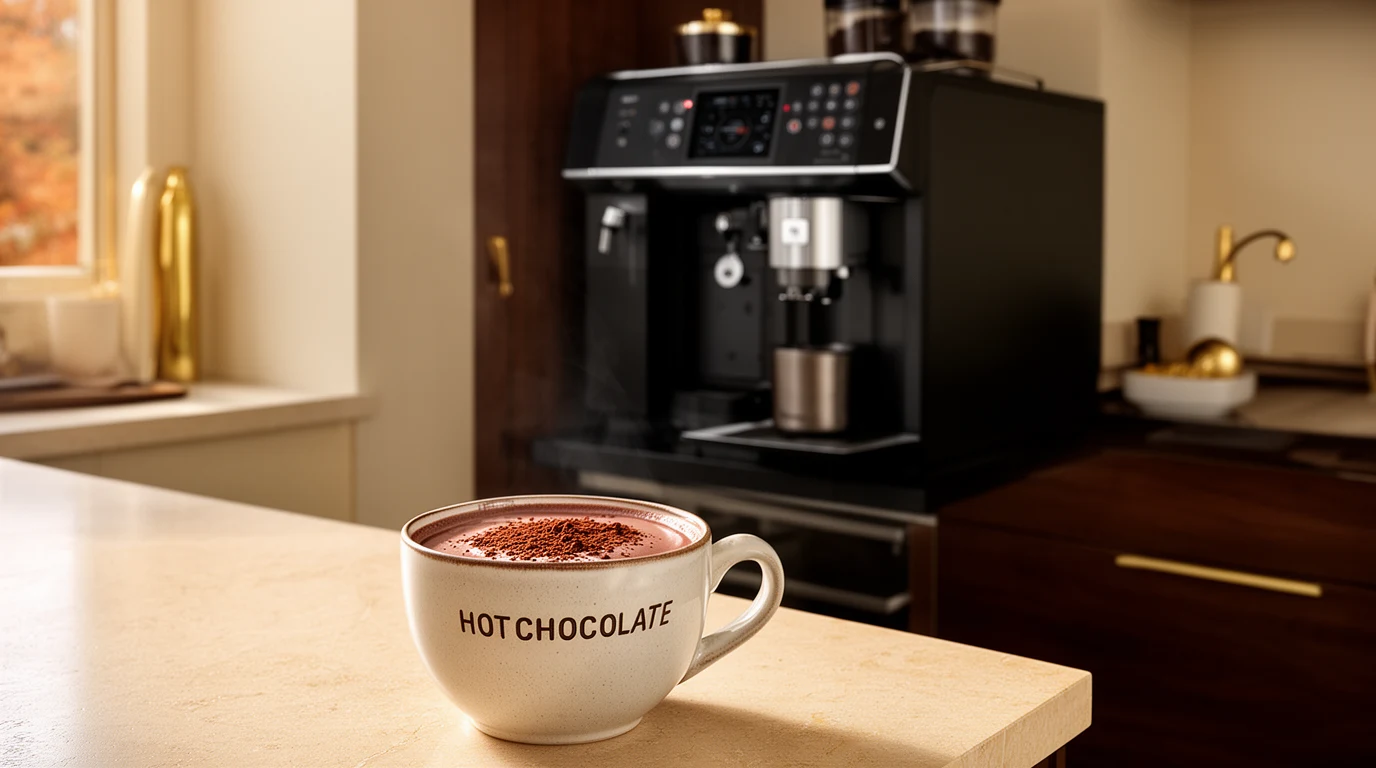
An office coffee machine that serves hot chocolate as well as coffee sounds straightforward. In practice, it changes the type of machine you need, the ingredients you order and who looks after it each day.
If your team wants cappuccinos, flat whites and hot chocolate from one machine, here is what to check before you buy or lease. The best answer depends on the number of drinks, the available space and how much cleaning your workplace can realistically manage.
Can a bean-to-cup office coffee machine make hot chocolate?
Yes, but not every bean-to-cup machine can. Many excellent coffee machines grind fresh beans and prepare black coffees or milk-based coffees, yet have no dedicated chocolate system. You cannot assume that a machine offering a café-style mocha also offers a proper hot chocolate.
For an automated hot chocolate, look for a compatible machine configuration with a dedicated soluble-ingredient canister and mixing system. Check the exact model and specification, not just the product family name.
Three setups worth comparing
1. Coffee-only machine
Best when the workforce mainly wants espresso, americano and similar drinks. The setup is generally simpler, but hot chocolate must be provided separately. This is often perfectly reasonable for smaller workplaces where chocolate is only an occasional request.
2. Bean-to-cup with powdered milk and chocolate
A machine with soluble milk and chocolate ingredients can provide a broader drinks menu without a fresh-milk fridge. That can make day-to-day management more predictable for an office with no dedicated person maintaining a milk system. It is not maintenance-free: ingredient hoppers, mixers and the internal cleaning programmes still need attention.
3. Bean-to-cup with fresh milk and chocolate
This can be the right choice when coffee quality and a broader drinks menu both matter. Fresh milk adds a refrigerator, milk-system cleaning and milk stock rotation. A chocolate-capable configuration may still use soluble chocolate alongside fresh milk. Ask the supplier to demonstrate the actual hot chocolate and mocha recipes rather than judging from a menu screenshot.
Which Gaggia machines should you look at?
The Gaggia G100 is worth considering for workplaces that want a compact commercial solution and a useful range of drink choices. But G100 variants and ingredient configurations differ: specify fresh or powdered milk and confirm chocolate capability on the exact configuration quoted.
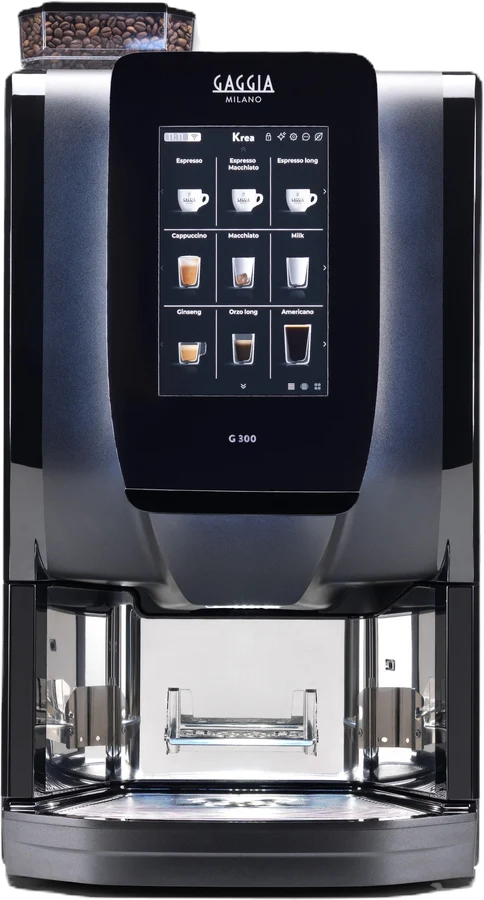
For a workplace that prefers granulated milk, also compare the Gaggia G300. Its soluble-ingredient configurations are useful to discuss when milk and chocolate are both required. Confirm the supplied canisters, compatible ingredients and the actual hot chocolate recipe in the quotation.
For busier tea points, the Gaggia G700 family may offer a more suitable high-capacity route, including fresh-milk and chocolate configurations where specified. The right version depends on the ingredients, service layout, expected peak use and whether a plumbed-in installation is feasible.
A coffee-focused JURA machine can still be an excellent choice for offices where hot chocolate is not important. If hot chocolate is a must-have, however, do not buy a coffee-only setup hoping to add chocolate later.
Compare the Gaggia G300 powdered-milk and chocolate setup
What matters more: staff numbers or cups per day?
Daily volume matters, but the busiest fifteen minutes matter just as much. A 40-person office where everyone visits the kitchen after a meeting can put more pressure on a machine than a larger hybrid office with staggered breaks.
Ask how many cups your team actually makes on a busy day, how many people queue at once, and what proportion would choose chocolate or milk drinks. Chocolate and milk-based recipes take additional dispensing and cleaning steps; throughput on a specification sheet is not the same as real-world performance at your tea point.
Read our guide to sizing an office coffee machine
What does the machine need besides coffee beans?
Chocolate powder compatible with the machine’s soluble ingredient system; confirm product specifications and how it is replenished.
Fresh milk or powdered milk, depending on configuration.
Cleaning products for the brewer and, where fitted, the milk or soluble mixing systems.
Water treatment and routine filter changes appropriate to the installation.
Enough counter space for the machine, accessories and safe ingredient storage.
An apparently attractive purchase price can become less attractive once you include the refrigerator, installation, cleaning materials and servicing. Compare the complete solution, not just the machine cabinet.
See what to compare in an office coffee quote
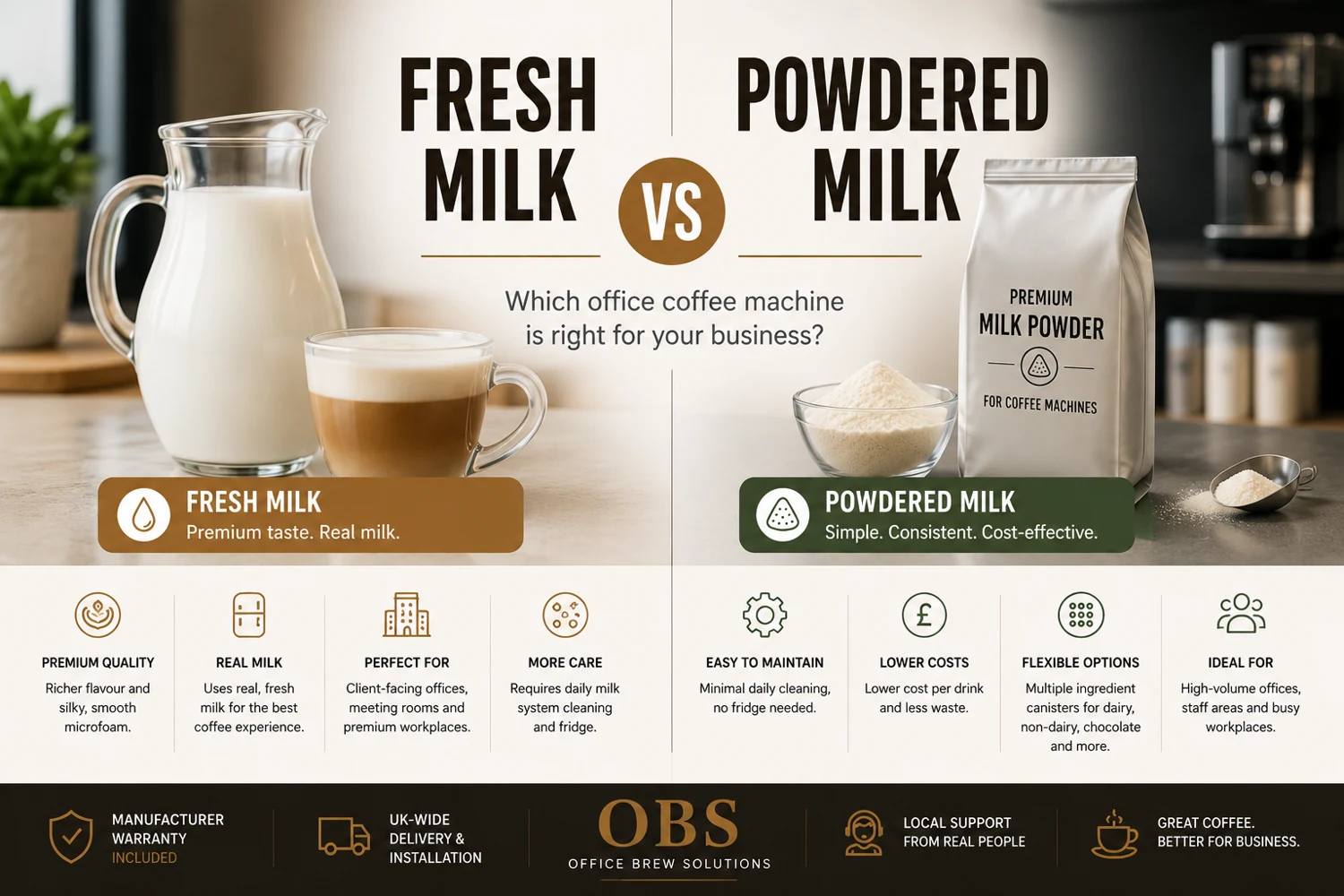
Is powdered milk easier to manage than fresh milk?
For many self-managed staff kitchens, powdered milk is the easier operational choice because there is no open fresh-milk container to refrigerate, replace and clean around. That does not automatically make it the better drink for your team: taste preferences matter, and the machine’s soluble system still needs regular cleaning.
If fresh-milk drinks are a priority, nominate someone to complete the required daily tasks and set up a regular supplies reorder. This is a small operational decision, but it is often the difference between a machine people love and one that becomes a headache.
Compare fresh milk and powdered milk in more detail
Questions to ask before ordering
Does this exact model and configuration dispense hot chocolate independently of coffee?
Can you taste both the hot chocolate and the mocha during a demonstration?
How many chocolate drinks can it make during your busiest break?
Does it need a water connection, drainage, a fridge or extra counter space?
Who cleans the mixer and milk system, and what is the daily routine?
What consumables and service costs sit outside the quoted purchase or lease price?
Our recommendation
If hot chocolate matters to the team, treat it as a core requirement from the start. For a low-maintenance office, a correctly specified powdered-milk-and-chocolate system is often worth exploring first. If the office strongly prefers fresh-milk coffee, compare a chocolate-capable fresh-milk setup and make sure the cleaning responsibilities are agreed.
We can help you compare compact and high-capacity options, arrange a machine demonstration and work through the kitchen requirements before you commit. You do not need to know the model number; just tell us roughly how many people use the space and what drinks they want.
Browse our office coffee machines
Speak to Office Brew Solutions
For a compact coffee point, compare a chocolate-capable G100 configuration. For a busier self-service area using granulated milk, include G300 in the shortlist. If a higher-demand workplace needs fresh-milk drinks as well as chocolate, discuss a suitable G700 configuration. Confirm the ingredients, recipes, cooling and water supply in the quotation.
Compare the Gaggia G300 powdered-milk and chocolate setup
Use the Quote Builder to compare the overall package, including milk configuration, accessories and purchase or lease routes.
Build my coffee and hot chocolate quoteFrequently asked questions
Can you make hot chocolate with a JURA office coffee machine?
A standard coffee-focused JURA machine should not be assumed to offer automated hot chocolate. Check the specific model and drinks menu. If hot chocolate is essential, consider a machine built for soluble chocolate ingredients.
Can one office machine make coffee, hot chocolate and mocha?
Yes, with the right chocolate-capable configuration. Not all bean-to-cup machines include the required ingredients or mixers, so ask for a confirmed menu and a demonstration.
Does hot chocolate make cleaning harder?
A soluble chocolate system introduces its own ingredient-handling and mixer-cleaning requirements. The exact schedule depends on the machine and manufacturer guidance.
Is it cheaper to buy or lease?
Buying and leasing suit different budgets. Compare the full installed package, any optional maintenance, consumables and the total amount payable over the agreement rather than choosing by a headline weekly figure alone.